Home to The Roost
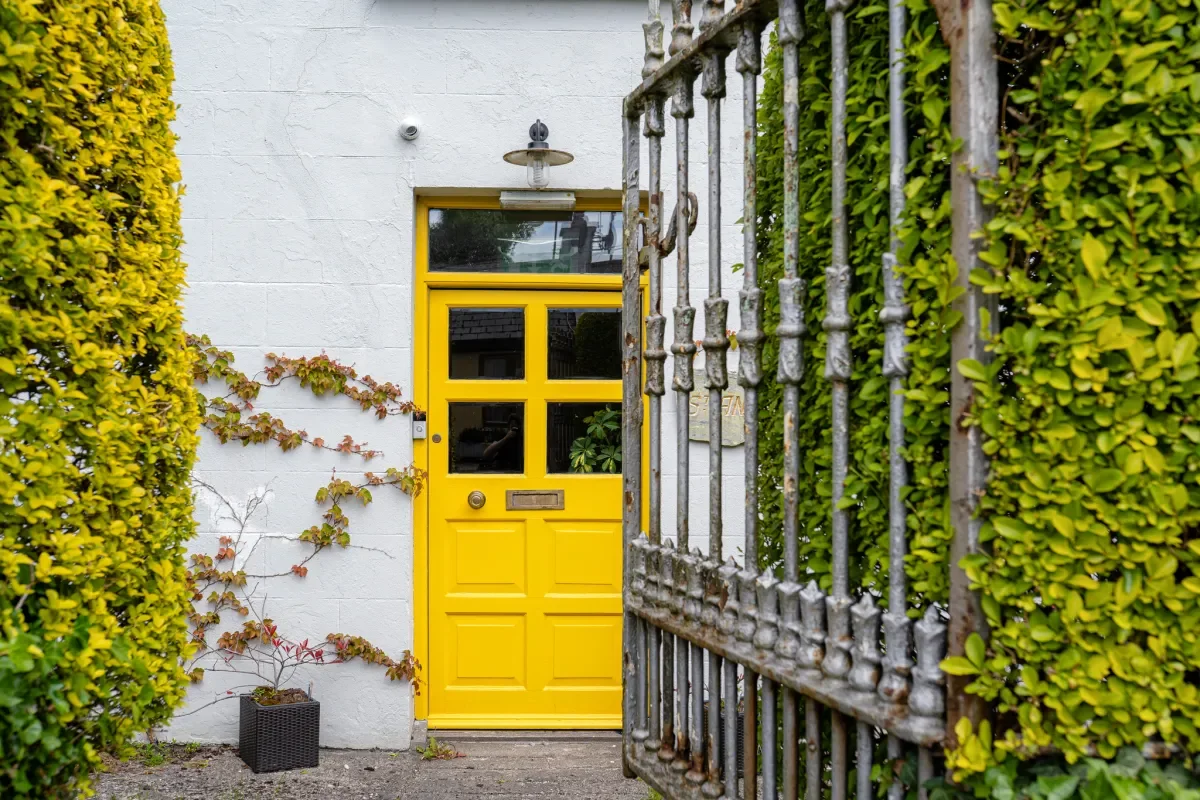
Four characterful properties in Westport, collectively known as The Roost, have been thoughtfully restored to create a collection of luxurious yet homely holiday retreats in one of Ireland’s most sought-after destinations, says Marie Kelly.
Paul Kilkelly and Linda Turner’s decision to swap the familiar rhythm of running a B&B for the niche world of luxury holiday rentals required courage, creativity and commitment. Their storied property, built on the banks of Westport’s Carrowbeg River in the 1830s to house local clergy, was Paul’s childhood home, so it was a deeply personal project, fuelled by passion and purpose.
Paul’s mother originally ran the guesthouse and he remembers fondly how she became a landlady more by chance than design. “She was asked to take in a couple of fishermen for the weekend once,” he explains. “My mother was quite brash, so she told them, ‘Right, you have a bed for the night, you’re cooking for yourselves – here’s the food – join us for a drink tonight. They all had a great time and that was the start of it. She ran the B&B for the next 40 years.”
Paul and Linda bought the house in 2010 – called The Manse in tribute to its heritage – and continued to run it as a guesthouse for another nine years from their nearby family home, where they live with their three children. But over time, they saw the hospitality landscape shift significantly as holidaymakers went in search of more than just a comfortable bed for the night – they wanted an experience defined by a strong sense of place and thoughtful design. At the same time, Paul and Linda began to recognise the rare appeal of a historic house and walled garden in the heart of one of Ireland’s most desirable towns.
So in 2019, they embarked on an ambitious renovation project that stretched beyond the seven-bedroom B&B to include the restoration of two characterful outbuildings within the grounds – an old hay shed, now The Hideaway, along with a tumbledown former cart shed, known as The Cart House – and a terraced townhouse nearby called The Row. Together, the four properties were reimagined as design-led luxury rentals, collectively known as The Roost.
“We were limited in terms of what we could do to The Manse because Westport is a designated Architectural Conservation Area, but it needed reconfiguring upstairs so that the rooms flowed easily,” explains Linda. The couple were determined to stay true to the integrity of the property and not lose sight of its past. Fortunately, Linda’s twin sister is an architect and she was invaluable in helping them navigate the nuances of renovating period buildings. Paul did some of the work himself, but he gives most of the credit to their local plumber, Martin Nee, and Westport builders, Westburg Construction. “Martin was on the job before 6.30am every morning leading the way,” says Paul. “And PJ from Westburg was excellent and so easy to work with. He understands these beautiful old properties and the aesthetic of the local area,” he adds. The same team worked on The Hideaway, The Cart House and The Row, making the entire project feel like “a real community effort”.
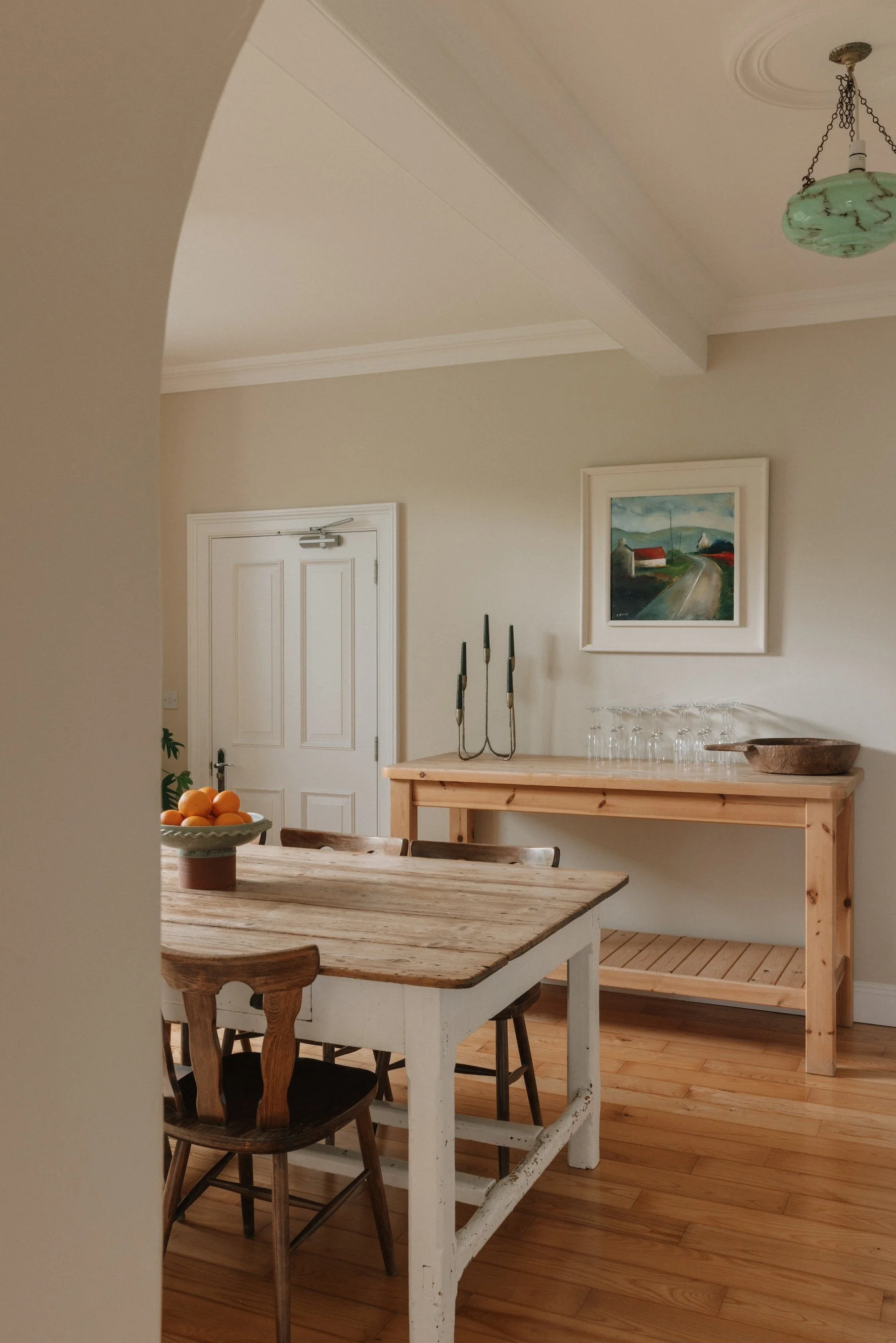
Linda wanted the interiors of all four properties to draw on the design language established by Paul’s mother in The Manse – cosy and comfortable, but with contemporary finishes and conveniences. Throughout each property, she has curated a considered mix of materials for a cohesive and enduring design narrative. The Hideaway, The Cart House and The Row each have birch-ply kitchens, chosen for their warmth, character and material honesty. The bed linen is from Northern Feather in Westport. “I’ve always been drawn to natural materials like linen and cotton,” says Linda. “I think getting into bed at night should be the nicest experience and that won’t come from synthetic fabrics.” Thoughtfully layered throws, blankets and cushions from McNutt of Donegal and Foxford Woollen Mills imbue each property with a discreet but tactile sense of luxury.
“I had a clear vision for the smaller properties and was fairly at ease shaping their interiors, but because of the scale of The Manse, I felt I needed expert help, so I asked Rosie Johnson from the Clifden interiors store, Provenance, to work with me,” explains Linda. “She had been a guest in the house, so she was familiar with the space and she had a really good feel for what we wanted.”
In the three smaller properties, white walls amplify the natural light, creating an impression of space and airiness, but The Manse, with its high ceilings and tall sash windows, needed a more considered palette to prevent it from feeling cold and vacuous. Guided by Johnson, Linda developed a sophisticated colour scheme that brought warmth, depth and personality to each room while remaining faithful to the building’s period character. Farrow & Ball’s Stony Ground, a classic shade of stone with a red undertone, gives the front sitting room a cocooning feel, while Joa’s White, a clean taupe with a hint of black, lends the dining room a quiet elegance that feels homely and inviting.
“Upstairs, I wanted to keep the whole aesthetic simple and unified,” explains Linda. “We chose one colour scheme for the entire floor – Farrow & Ball’s Dimity for the bedrooms and London Clay for the panelling and wainscoting in the bathrooms. The curtains in each of the bedrooms are made from William Morris-style fabric but in slightly different colourways.”
Linda confesses that if she’d been solely responsible for selecting paint colours for each of the seven bedrooms, six bathrooms, two sitting rooms, kitchen and dining room, she would have lost a lot of sleep. “There wasn’t time or money to make mistakes,” she admits. “We had just six weeks to turn The Manse around before the start of the season. It’s our livelihood, so we couldn’t afford for the project to run indefinitely.”
All four properties are peppered with a mix of inherited furniture from Paul’s mother, pieces picked up at local antiques store The Gaiety, online marketplace Done Deal and a variety of secondhand and vintage stores such as Kilkenny Architectural Salvage. “I found the sofa for The Hideaway at Oxfam on Francis Street in Dublin for €200, then had it covered in a fabric I sourced in Clifden,” says Linda. The 10-foot dining table in The Manse was found at Honans Antiques in Gort and originally came from a workhouse. Linda and Paul love pieces that tell a story. “I’m constantly online sourcing secondhand finds,” explains Linda. “It’s an ongoing curation of pieces that have a history.”
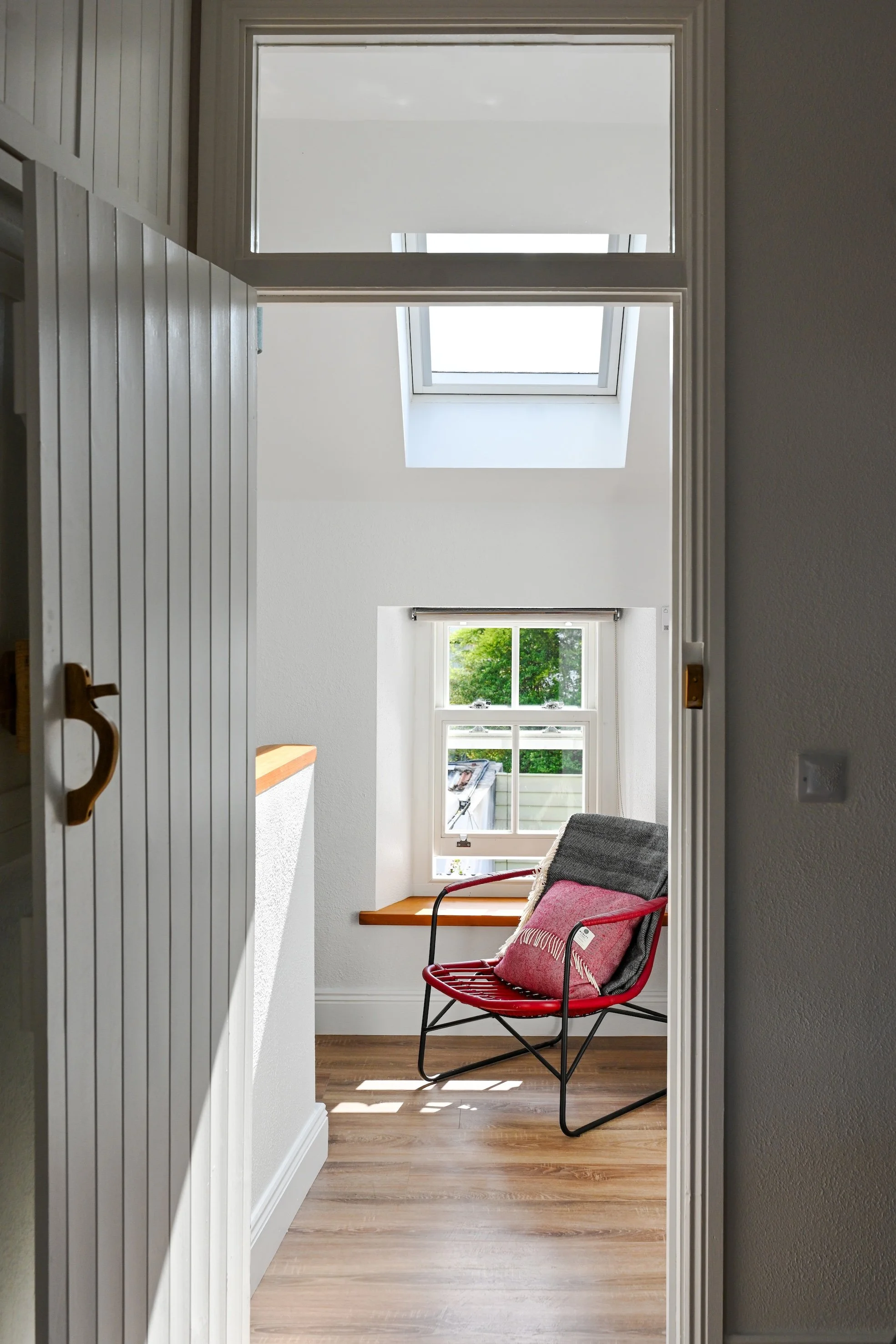
It takes a keen and confident eye to blend contemporary buys with weathered heirlooms and storied finds, but it’s something Linda has handled with skill and sensitivity. When she buys new, she chooses items with context, craftsmanship and authenticity from nearby businesses, independent stores and local artisans – beds from Finline Furniture in Galway, candles from Townhouse Westport, toiletries from The Handmade Soap Company, mugs from 9 Yard Ceramics in Louisburgh and decorative items from Superfolk in Castlebar.
“I bought our turf baskets from John Delaney outside Castlebar – he goes by the name of Ould Crafty. I visited him in his cottage and had a cup of tea with him. When you go out of your way to source interesting items that are connected to the locality, you have the most amazing interactions with people. It’s one of the best parts of my job,” she says. Linda recently sourced a sugán stool for The Hideaway made by craftsman Brian McMahon of McMahon Chairs in Co Clare. “If I could afford to buy all of his dining chairs, I would – they’re absolutely beautiful. I haven’t been to his workshop yet, but I intend to.”
Local artists proudly feature in all four properties, from Sheila Brown to Padraig McCall. “These contemporary artworks always seem to sit beautifully wherever I hang them,” says Linda. This is undoubtedly down to her curator’s eye and her gift for weaving together the romance of the past with the sophistication of the present.
This article was originally published in The Sunday Times Ireland, August 2026