Beating the ‘September scaries’
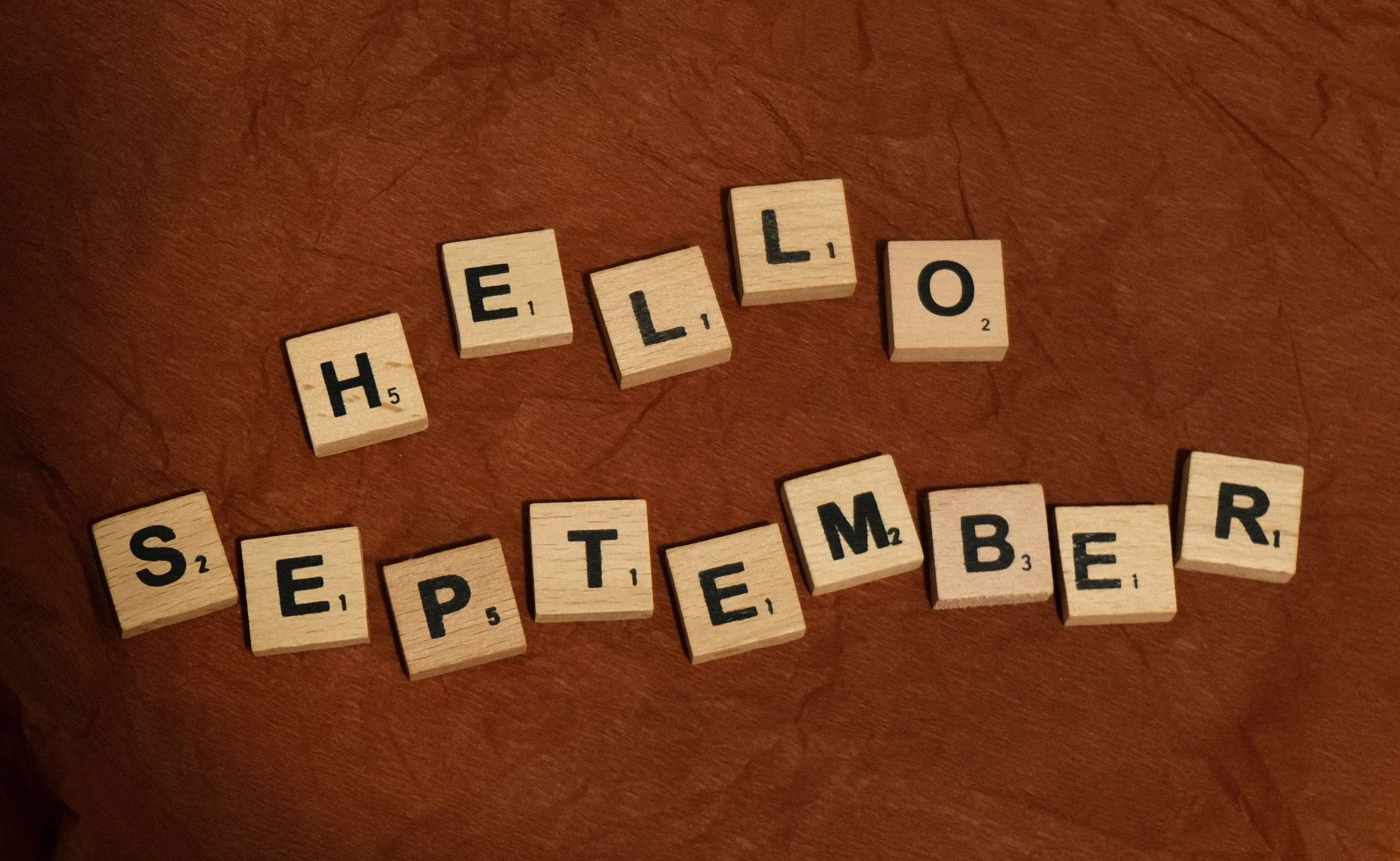
End-of-summer sadness is an affliction for many. Marie Kelly asks the experts how to make the transition into September less anxiety-inducing.
In summertime, rules and routine are flung to one side alongside school uniforms as adults and children alike become looser and freer. There’s a headiness to June and July and a languid ease to August that feels like permission to press pause on the realities of everyday life. For a few fleeting weeks, the pace softens, but as August creeps quietly towards September and there’s a whiff of frosty morning freshness in the air, many people develop a knotted stomach that’s facetiously called the ‘September scaries’. While the phrase sounds flippant, the feelings behind it can be very real, particularly for people already struggling with anxiety or depression.
“Transition and the uncertainty that comes with it is the root of a lot of anxiety,” explains Dr Susan Brannick, Clinical Director at Aware and an adjunct professor at UCD. “In summer, we get used to one way of doing things for a while, but then it changes and there’s discomfort in that,” she explains. “For a lot of adults, September and October can feel like particularly big transitional points because of the return to school and college routines.”
Severe end-of-summer sadness isn’t only about the dread of swapping seasonal spontaneity for old rhythms, or tackling the life admin we’ve shelved in favour of beach days and barbecues. It’s often rooted in regret that summer wasn’t all it could or should have been. When social media is awash with images of friends sipping sangria by infinity pools, it’s easy to feel you’ve somehow squandered your own summer. Like Christmas, our expectations for the season can be impossibly high, with the reality sometimes falling far short.
“If someone is already struggling with their mood or mental health, then the images on their social media and the sounds of barbecues outside can be difficult because that’s not their experience,” explains Brannick. “If you’re suffering, it can be hard to imagine feeling happy and fulfilled. Depression tells you the lie that you’re on your own, that things are never going to get better and that no one else will ever understand.”
Beating the September scaries has a lot to do with being intentional about how you ease into autumn. “I’d ask myself: How well do I manage transitions? What do I know helps me? What’s helped me in the past and what could help me on this occasion?” says Brannick. She also advocates taking a pause when your thoughts begin to run away from you. “If you notice that your mind is racing off into the future, just stop and ask, ‘Okay, hang on, what’s going on here? I’ve now projected onto the whole of next month.’ Or, ‘I’ve been thinking about this problem for an hour; what can I do differently?’” The aim is to interrupt the cycle of worry by becoming more aware of your thoughts rather than being pushed around by them. “And crucially take action that is in line with what matters to you, rather than being driven by worry,” adds Brannick.
There is also a particular pressure we’ve attached to September. For years, it’s been framed as the new January: a moment to reflect, reset and reinvent. September is no longer simply a season of shifting routines, it’s become a cultural touchpoint for personal reinvention, another deadline by which we’re expected to have ourselves all figured out. While this narrative can feel motivating for some, for others it can simply add to the pressure and stress of a new season. “It’s difficult to say whether these kinds of narratives really impact people,” says Brannick, “but there’s a broader issue around comparison that can emerge. “Am I where I should be? Am I succeeding as well as other people my age? How am I doing compared to others in my cohort?”
“It ties into a narrative around achievement, happiness and contentment,” Brannick adds, “but the nature of most people’s lives is transitory; things fluctuate and you’ll have a whole range of different experiences. In clinical practice, I see a lot of perfectionistic striving and that can lead to shame later on when things don’t go to plan.”
For Sinéad Kennedy, the end-of-summer dread is deeply personal. The mental health and wellness coach and host of wellness activity breaks has never liked summer’s slow retreat. Having hated school, August was tinged with dread. “The weather is changing, the air is getting cooler and the leaves are dropping off the trees. It’s as if nature is telling us the good times have come to an end,” she says.
“Autumn is synonymous with hunkering down,” she adds. “Everybody is home from their holidays. Your annual leave is spent and you’re living for the next bank holiday. It’s back to school, it’s the end of the financial year and the pressure is on.”
The weather is changing, the air is getting cooler and the leaves are dropping off the trees. It’s as if nature is telling us the good times have come to an end.
Kennedy’s practical advice for letting go of summer begins with refusing to let autumn simply happen to you. Instead, begin making plans now that give you something to look forward to in the months ahead. “You’ve got to be proactive about getting out and about, staying socially connected and protecting your physical health. A lot of people sit around and wait for invitations and then complain when the invitations don’t come,” she says. Kennedy worries that remote working can make it easier to retreat from the outside world. “It’s easy to become lazy about leaving the house when you’re online all of the time, but it’s so important to arrange a monthly lunch with friends or a walking challenge.”
Kennedy describes herself as “a doer”, so organising comes easily to her. But you don’t have to be a natural gatherer of people to put plans in place for the autumn. “Join a fitness class or a language class. Try playing Bridge. Get the Couch-to-5K app.” She believes maintaining the connection we forge with nature in summer is key to transitioning into autumn. “Wrap up on a cold day, bring a flask to the park and just spend some time with a cup of tea on a park bench. There is so much research on how disconnected we are from nature these days. But we are creatures, we’re supposed to be outside, getting our hands dirty, gardening and the rest of it. I’m a huge advocate of getting into the sea or walking barefoot on the grass because you’re physically in nature that way.”
Kennedy acknowledges that there are times when there’s no other choice but to stay at home on a cold, dark Tuesday night with the walls closing in. “You can’t exercise yourself into oblivion or be outside morning, noon and night. But you can keep your hands busy and your brain busy. I always have a jigsaw on the go. It’s a brilliant distraction from doom-scrolling and the feeling that you’re missing out.” Kennedy believes you have to be really intentional about staying connected, curious and active.
If the prospect of making changes feels overwhelming, Brannick suggests starting small. “Think about what’s possible for you. What’s the smallest change you could make that would help?” she asks. After 20 years of working with people, she believes we are often far more resilient and resourceful than we realise. “Anxiety tells you that you won’t be able to cope, that a situation is going to be catastrophic. It’s incredibly difficult to step out of that cycle, but it is possible.”
Self-compassion, she says, is an important part of that process. “Often people think, ‘I should be doing this’ or ‘I shouldn’t be feeling that’, but regardless of whether you should or shouldn’t, if that is your experience, then that’s your experience,” she explains. A self-compassionate approach acknowledges difficult emotions and asks: “Okay, I’m anxious. I don’t want to be, so what can I do about it?” Brannick suggests considering how you’d respond if someone you loved was feeling the same way. “Your reaction probably wouldn’t be to get frustrated or angry with them.”
Brannick reminds us that: “Mental health is a continuum. It’s not the case that you get ill and I’m healthy forever. Our mental health changes and evolves in relation to different events and circumstances.” She adds that anxiety and depression can be hard to recognise as people often think that it’s just the way they are built. “You’ll often hear someone say, ‘Oh, I’m just a worrier’ or ‘That’s just the way I am.’”
But if your anxiety or low mood is actively preventing you from doing what you enjoy or what you need to do, then Brannick suggests it’s time to seek out professional help. “If life has been consistently hard for several weeks, then that’s probably the time to get help.” Kennedy agrees: “If you need help – therapy, life coaching, a GP, whatever – go for it. Acknowledge your feelings, don’t suppress them and talk to people.”
For most of us, though, the key is not to fight the advent of autumn or wish summer back into existence, but to find fresh perspectives on the new season. Summer may be ice cream cones and being on the beach, but autumn is “hot chocolatey mornings, and toasty marshmallow evenings, and, best of all, leaping into leaves,” as Winnie The Pooh put it.
This article was originally published in The Irish Times Magazine, August 2026