Singing for joy
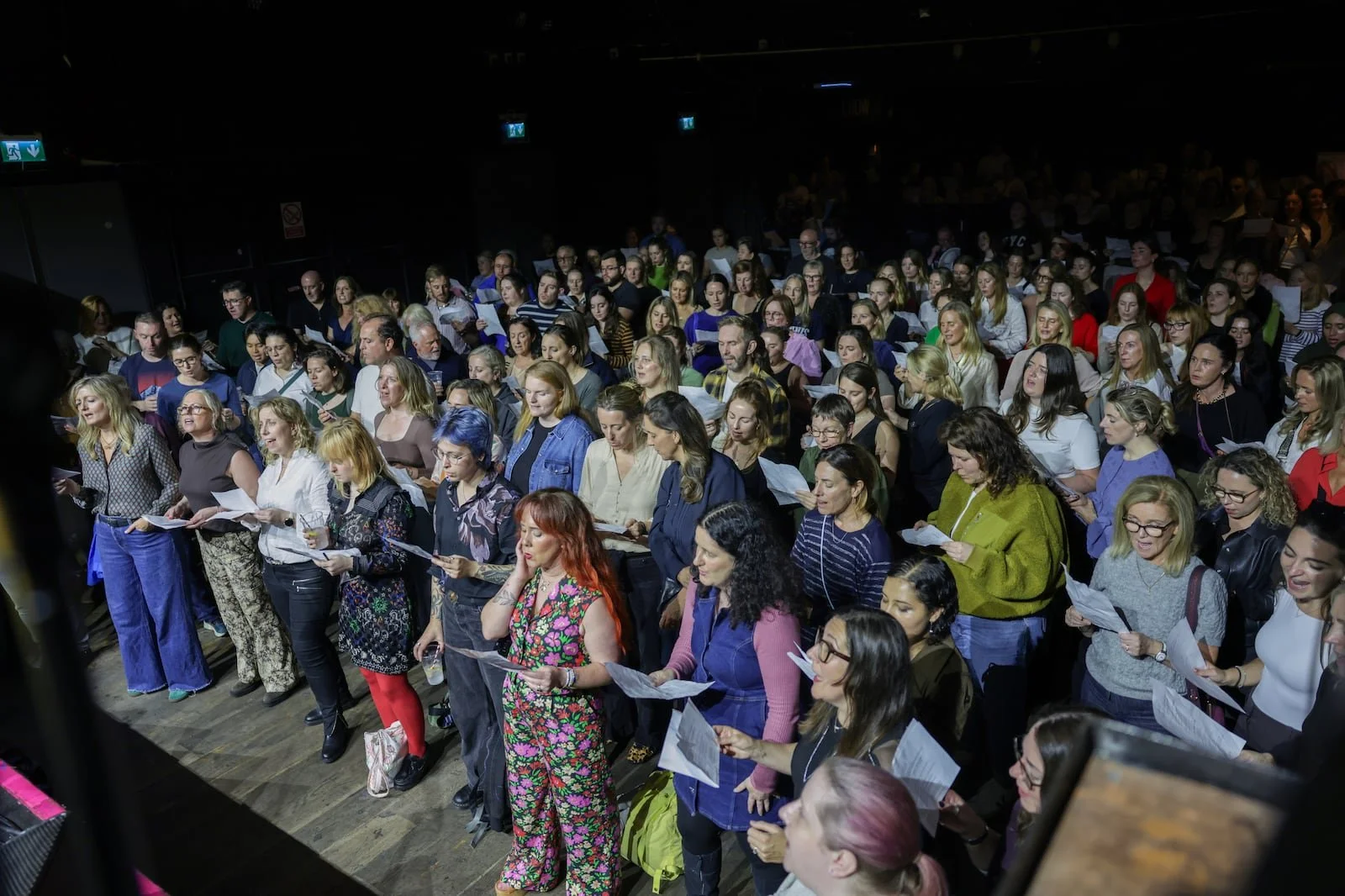
Group singing is proving more than an enjoyable pastime. It’s becoming an antidote to loneliness and diffidence, discovers Marie Kelly.
Choirs may be synonymous with the magic of Christmas carols and festive cheer, but the uplifting power of group singing has no seasonal sell-by date. On any given evening in local venues around the country, people are gathering together to sing. Some are seeking connection in an increasingly fragmented world, others an escape from the pressures of everyday life or a boost in self-confidence, but whatever draws them through the door, they all leave feeling lighter than when they arrived. Group singing is proving to be more than just an enjoyable pastime or Yuletide tradition. It’s becoming an antidote to loneliness and diffidence.
“When we sing, we release oxytocin, the human love hormone,” says Rachel Dempsey, founder of Singing for Change, an initiative within her Full Circle Change project, which aims to foster connection, wisdom and resilience for the benefit of people and the planet. Dempsey holds an MA in ethnomusicology from Queen’s University Belfast, a discipline she describes as “the anthropology of music and how it intersects with society and culture”. While the physical and mental health benefits of singing are now well established, she says it’s the effect on human connection that fascinates her most of all.
“The science of how singing creates and strengthens bonds between individuals is especially interesting,” she says. A 2015 University of Oxford study followed adults taking part in weekly singing, creative writing and craft classes. After just one month, those in the singing group reported significantly greater feelings of closeness and social connection than participants in the other classes.
The mother of two describes singing as “a bio-psycho-social technology for connection and a pathway to wellbeing” and hosts regular singing circles in a cosy cabin in the back garden of her home in Newtownmountkennedy, as well as workshops in Dublin 2. They are all guided by the same philosophy: singing is for “wellbeing and connection, not perfection or performance”.
For Dempsey, the greatest barrier for people isn’t ability but belief. “People are so inhibited about their voices these days,” she says. “They’re so full of shame because someone once told them they can’t sing. But really, it’s denying people their human right – to sing with others.” She argues that singing has become unnecessarily exclusive. “It’s this niche activity that you either qualify for or you don’t. Very few of us feel like we do.”
Tara Heffernan, founder of Waterford-based Sing for Joy, shares this view. The organisation was established to make singing accessible to everyone, regardless of experience or ability. “We take on outside beliefs so easily,” says the music teacher and vocal coach. “If someone has told you you’re not a good singer, then it becomes something you’re simply not used to doing.”
Singing out is learning to speak out. It’s a wider interpretation of voice. Working on their singing voice has helped some members of the group advocate for themselves.
Her choir actively challenges this mindset. “We’re not in competition and we choose all of our soloists from within the group. Some other choirs bring in professional singers, but we pull from the people sitting in the chairs in front of us.” Heffernan says that watching somebody step up to the microphone, who may never have sung solo before, is one of the most beautiful experiences. “When you hear them sing, it’s so perfect and everybody is clapping – it’s just such an incredible confidence booster.”
Last week, Heffernan posted a solo performance of Wild Mountain on Instagram. Within days, it had attracted more than 30,000 views. The former secondary school teacher explains that the soloist had recently been diagnosed with autism and had always found it difficult to communicate and to have friends. “She says the singing group has helped so much with her confidence and really supported her through her diagnosis.”
For Dempsey, this is exactly what group singing is about. “Singing out is learning to speak out”. “It’s a wider interpretation of voice,” she adds. The benefits of group singing extend beyond community and connection. “Members of the group have reported becoming more assertive – in the workplace, for example. In the past, they may have found it difficult to speak up, but working on their voice has helped them to advocate for themselves.”
Heffernan is currently completing a master’s in mental health practices for young adults. One of her lecturers is Colman Noctor, the well-known child and adolescent psychotherapist, author and TED Talk speaker. “He often says research shows that two of the best things you can do for your mental health is join a choir and volunteer.” Sing for Joy embraces both. “We recently held a concert for the Solas Cancer Support Centre in Waterford and I think it really helps to be part of something bigger than yourself. It helps you to feel positive about yourself and who you are as a person.”
For Dubliner Karen O’Shea, singing has been a constant outlet since her school days. The lifelong choir enthusiast believes its benefits go far beyond music. “Singing gets you out of your own head,” she says. “It’s a bit like yoga. When you’re practising yoga, you’re learning to inhabit your body. When you’re singing, you’re accessing a different part of your brain.”
These days, O’Shea is a regular at Casual Choir, the drop-in singing group founded in 2018 by musical director Róisín Savage. Its appeal is captured in its playful tagline: ‘One song, one session. No audition, no sheet music, no commitment’. Participants arrive with nothing more than a willingness to sing – learning, rehearsing and recording a complete song in a single evening, which is then uploaded to social media.
“I love being able to turn up unprepared,” says O’Shea. “By the end of the session you’ve had a great time, because Róisín is great fun, but also you’ve created something tangible. The performance is recorded, so you have something to look back on afterwards.” When the 51-year-old first became a primary school teacher, she took ownership of her school’s choir. “Our principal had been kicked out of her school choir as a child for not being good enough, so she had a very strong belief that everybody should get involved.”
Savage believes auditions and the fear of not being good enough are a barrier to entry for many. “I wanted to set something up where people didn’t have to audition, didn’t need to know how to read sheet music and weren’t under pressure to commit to a weekly choir. They could just come along for the evening and sing.” After floating the idea on social media, the response was immediate. “Within a couple of weeks, I’d sold out the first event, with 150 people turning up.”
Since then, Casual Choir has outgrown the lecture halls where it began, moving into larger – and livelier – venues, including The Sugar Club, The Button Factory, Whelan’s and Vicar Street. Savage describes the evenings as closer to a traditional sing-song than a formal choir. “As Irish people, we’re comfortable with sing-songs, but not necessarily with the idea of a choir,” she says. “Everybody has been part of a sing-song at one time or another.”
This informality, combined with the energy of singing in a crowd, is central to the experience. “There’s huge comfort in being part of a big group,” says Savage. “I’m not going to single anybody out for singing flat. It’s the power of the group – and the bigger the group, the better.”
This collective spirit is what keeps people coming back. Savage says the camaraderie at every event is remarkable, while Heffernan sees a similar sense of belonging at Sing for Joy, which currently has a waiting list of 250. “Members anchor their week around Tuesday evenings,” she explains. “They tell me that no matter what they have going on in their lives, they can come here and leave it at the door. At the end of the session, people are slow to leave. Everyone is chatting and helping to clean up. There’s a lovely sense of community. It’s joyful.”
Dempsey describes her community of singers as “a tribe”. “A lot of women in the group rely on one another; they’ve become a source of support for each other.” For anyone feeling intimidated by the idea of turning up alone, Dempsey has a simple message: everyone was a newcomer once. “Everybody who’s now a regular, or considers themselves part of the group, walked into the room for the first time feeling nervous and worried that they couldn’t sing,” she says. “Showing up anywhere on your own can be difficult, especially if you’re going through a tough time, but it doesn’t take long to realise that everybody is incredibly laid-back and friendly.”
O’Shea likens group singing to a team sport, “but for people who are not into sports”. It has the same sense of shared purpose, the same collective creativity and, above all, the deep feeling of belonging associated with being a team player.
This article was originally published in The Irish Times Magazine, October 2026